Handling Yard Debris After a Chicago Storm
Storms in the Chicago Southland can drop more debris in one night than a homeowner can reasonably move in a weekend. This guide explains what to check with your municipality and when professional hauling may make sense.
Branch and debris cleanup is the unsexy half of storm recovery — but doing it wrong can end up costing more than the storm did.
What Counts as "Yard Debris"
Most municipal programs use a tighter definition than homeowners assume. Generally:
- Yes: branches, limbs, brush, leaves, grass clippings, small logs.
- Sometimes: stumps, full trunks, anything over a certain diameter.
- No: lumber, painted wood, treated wood, root balls with soil, anything containing nails or hardware.
If you mix the two categories, the village often refuses the whole pile. Sort first, save yourself a headache.
Free Municipal Pickup: How It Usually Works
Many municipalities offer some form of curbside brush pickup, but size, bundling, timing, and storm rules vary:
- Branches stacked at the curb, cut ends facing the street.
- Length and diameter limits — commonly 4 to 8 feet long, no thicker than 4 to 8 inches.
- Tied bundles often required, with twine (not wire).
- Set out by a specific day for next-day pickup, on a published schedule.
- After major storms, many villages run a one-time pass that picks up looser piles.
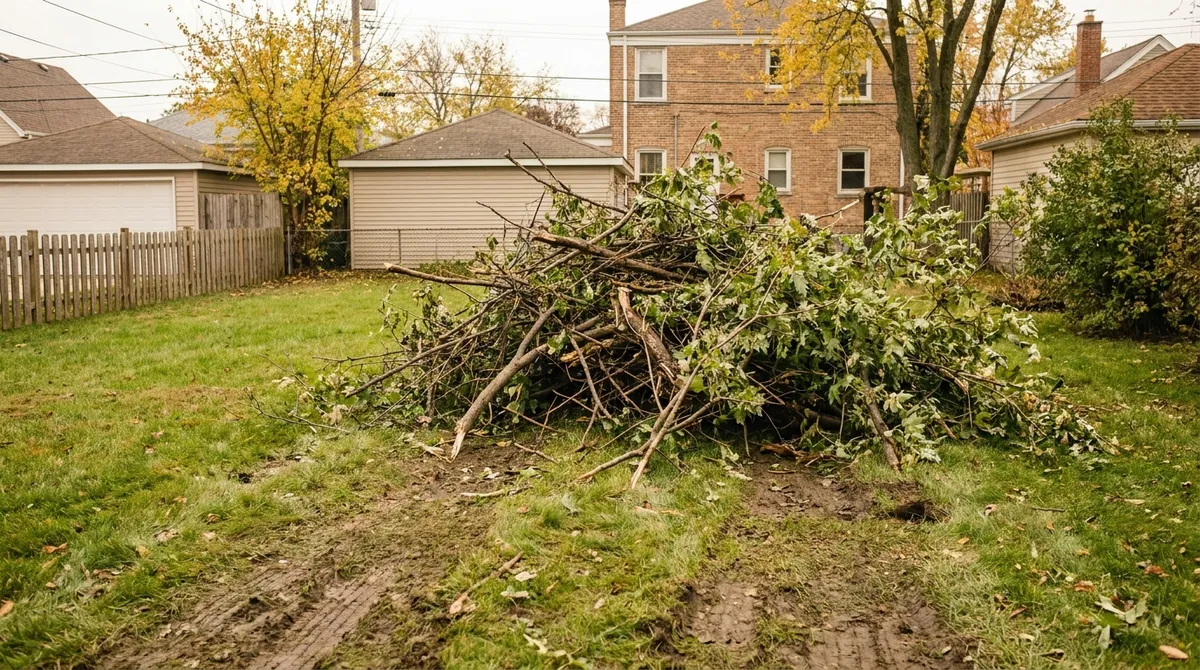
Look up your specific village's brush rules before you start dragging. Schedules and limits can change year to year.
When Free Pickup Will Not Cover You
Free pickup is great for routine debris. It falls short when:
- A whole tree is down — most municipal trucks do not handle full trunks.
- Volume is too high — a half-acre of brush will take many pickup cycles.
- You have a stump or root ball to dispose of.
- You need it gone before the next pickup window — sale, party, insurance walkthrough.
- You cannot drag it to the curb because of injury, age, or distance.
In those cases, you have two options: DIY hauling or a cleanup service.
DIY Hauling Realities
A pickup truck and a few weekend trips to a yard waste transfer station will move a moderate amount of debris. Realities to plan for:
- Most transfer stations charge by weight or volume — call ahead for current rates.
- Most do not accept stumps. Or they charge a heavy premium.
- Loading and unloading time is the bottleneck, not driving.
- Saturday afternoons are crowded; weekday mornings are not.
A typical homeowner moves 3 to 6 cubic yards of brush per truck-bed load. Match that against how much you actually have before assuming DIY is cheaper.
When a Cleanup Service Is the Right Call
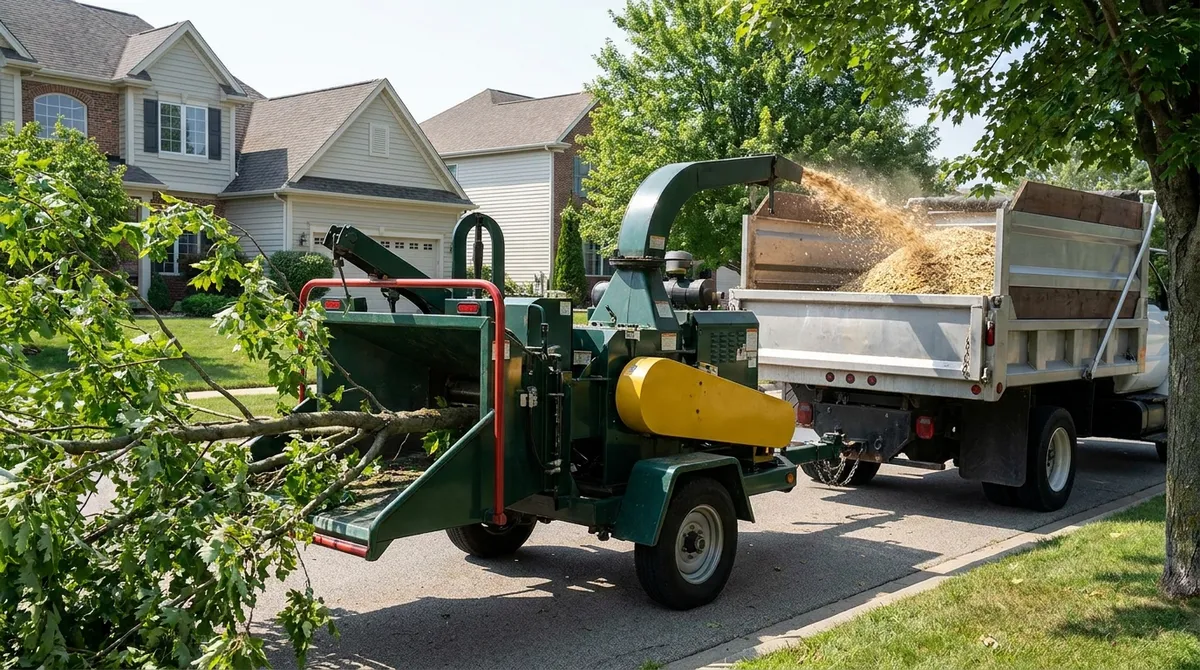
A cleanup crew with a chipper and a dump trailer can clear what would take a homeowner four weekends in about two hours. Worth paying for when:
- Total volume is more than a couple of pickup-truck loads.
- Material includes whole trunks, large stumps, or anything heavy.
- You want it gone in one visit, not over several weeks of village pickups.
- You are dealing with injury, age, or other physical limits.
Frequently Asked Questions
Will my village pick up a whole fallen tree for free?
Usually no. Free programs are designed for branches and brush, not full trunks or stumps. Some villages make exceptions in the days after a declared major storm — check with your village's public works office.
Can I burn brush in my yard in the Chicago suburbs?
Open-burning rules vary and may prohibit yard-waste burning. Check current municipal and fire-district rules before lighting anything.
How much does a debris cleanup service typically cost?
Pricing is usually by truckload or by the hour with a minimum. Smaller residential cleanups commonly fall in the low hundreds; storm-volume jobs can run higher. Get a free on-site estimate before booking.
Do I have to sort debris before a service comes?
For a paid service, no — they will sort and load. Sorting is mainly for free village pickup, where mixed piles often get refused.
If you have more debris than local pickup can handle, JDS Tree Service offers branch and tree-debris cleanup across its south suburban service area.