When Does a Tree Actually Need to Come Down?
There is no clean checklist that says a tree must go — it is almost always a judgment call balancing risk, cost, and how much of the tree is salvageable. This guide walks through the warning signs that usually mean removal is the right answer, the gray-area cases where pruning or cabling can save a tree, and what a pro looks for before recommending the chainsaw.
For homeowners across the Chicago Southland and nearby Northwest Indiana, the answer often turns on decay, pest damage, poor structure, or storm splits.
The Five Signs That Usually Mean Removal
These are the situations where a certified arborist will almost always recommend removal rather than try to save the tree.
- More than half the canopy is dead. A tree with mostly dead branches is in steep decline and rarely recovers.
- A large vertical crack runs down the trunk. Cracks longer than a few feet usually mean structural failure is on the way.
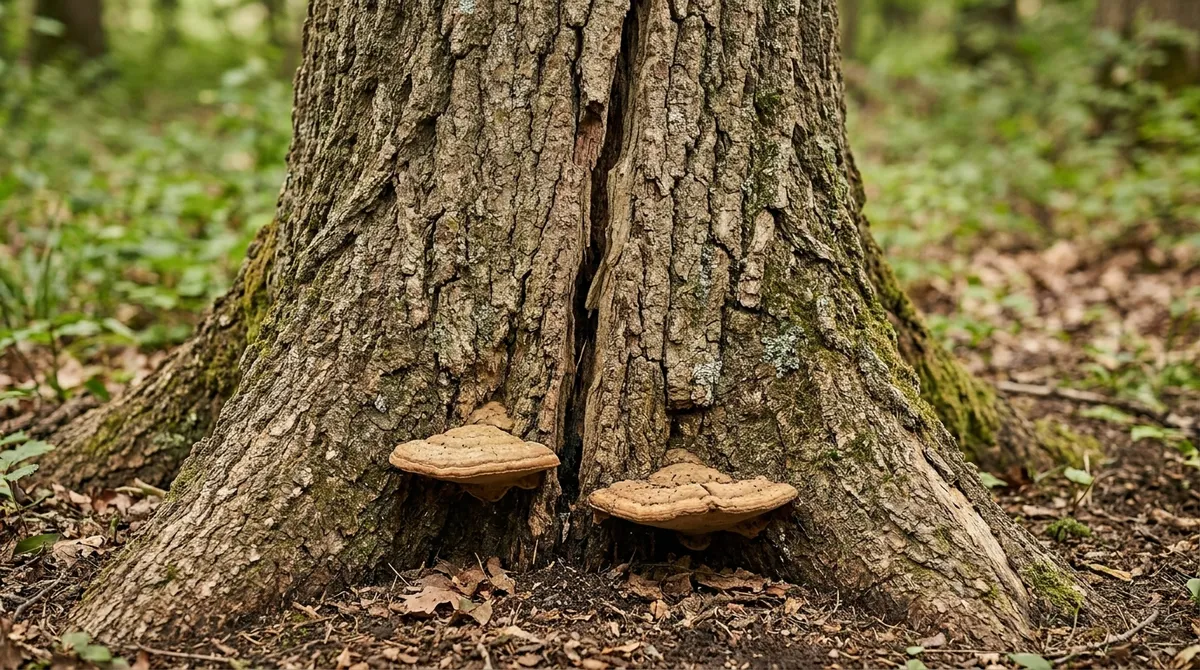
- Mushroom-like growths (fungal conks) at the base. These mean the roots or lower trunk are already rotting from the inside.
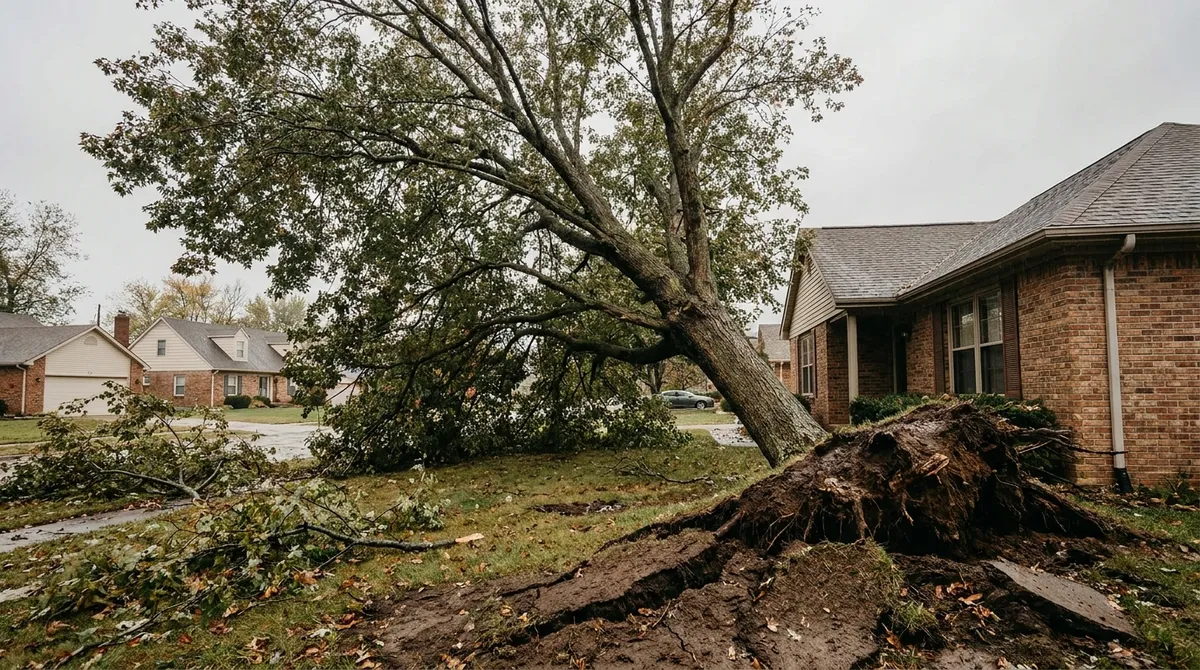
- A new lean. A sudden lean — especially with cracked or lifted soil on the opposite side — means the root plate is failing.
- It is dead. Dead trees do not get better; they get more brittle and more dangerous with every freeze-thaw cycle.
Trees That Look Bad But Can Often Be Saved
Plenty of trees look worse than they are. Before assuming removal, check whether any of these apply:
- A few dead branches in an otherwise full canopy — usually a pruning job, not a removal.
- One major limb broken in a storm — the tree often heals if the cut is cleaned up properly.
- Surface bark damage from a lawnmower or string trimmer — ugly but rarely fatal.
- A trunk that splits into two leaders with bark trapped between them — sometimes resolved with a steel cable or rod (cabling and bracing).
Cabling, crown reduction, or selective pruning can extend the life of a marginal tree by a decade or more — and cost a fraction of removal plus replacement.
Special Cases in the Chicago Suburbs
A few situations come up here that change the calculus:
Ash trees affected by emerald ash borer
EAB has already destroyed most untreated ash in the region. An ash with thinning canopy, woodpecker damage, and S-shaped tunnels under the bark is essentially a dead tree on a delay. Untreated infested ash should come down before they fall on their own — they get brittle fast.
Oaks with oak wilt
A red oak that wilts and drops leaves rapidly in summer almost always has oak wilt. Removal is usually necessary to protect adjacent oaks, since the fungus can spread through interconnected root systems.
Storm-split trees
A tree that has lost more than about a third of its canopy in one event is structurally compromised. Sudden spring storms and lake-effect winds in the Chicago suburbs frequently cause this.
What a Pro Actually Inspects
A reasonable arborist walks around the tree slowly, looks up, and looks down. They check:
- The root flare — is the soil cracked, lifted, or settling on one side?
- The trunk — any cavities, cracks, or fungal growth?
- The branch unions — any included bark or weak Y-shaped joints?
- The canopy — what percentage is alive, what is dead, what is dying?
- The site — is anything important close enough to be hit if the tree fails?
A free estimate that walks past your tree without looking up is not really an estimate — it is a price.
DIY vs. Pro
A small dead ornamental tree in an open yard is a reasonable do-it-yourself project for someone with a chainsaw and the right protective gear. Anything else — large limbs, leaning trees, anything near power lines, anything close to a building — is a job for an insured professional with the right rigging.
The biggest hidden risks in DIY removal include injury and property damage. Before hiring, request current insurance documentation and verify any registration required for the job location.
Frequently Asked Questions
How can I tell if a tree is dead or just stressed?
Scratch a small spot of bark on a young branch with your fingernail. Green underneath means alive; brown and dry means dead. Check several branches around the tree — partial die-back is different from a fully dead tree.
Will my insurance pay to remove a leaning tree before it falls?
Usually no. Most homeowner policies cover damage caused by trees that fall, not preventative removal. There are exceptions for trees the insurer flags as hazards during inspection, but it is uncommon.
How much does tree removal cost in the Chicago suburbs?
It depends mostly on size, location, and access. Small ornamental trees in open yards can run a few hundred dollars; large oaks near buildings or power lines can run several thousand. Get a free estimate before assuming.
Can I just have the dead branches cut out instead of removing the whole tree?
If the canopy is more than half alive and the trunk is sound, often yes — that is called crown cleaning. If most of the canopy is dead or the trunk has serious decay, removal is usually safer and more economical long-term.
If you are not sure whether your tree needs to come down, JDS Tree Service can review the site and explain practical options. For a formal tree-risk assessment, consult a qualified ISA Certified Arborist.