Stump Grinding vs. Stump Removal: Which Do You Need?
Stump grinding and stump removal are not the same job — and the right one depends on what you want to put on that spot, what your soil is like, and your budget. This guide explains the difference in plain English so you do not pay for full extraction when grinding will do.
In the Chicago suburbs, the answer is also shaped by our heavy clay soil, which makes full extraction harder and more expensive than in sandier parts of the country.
The Plain-English Difference
Stump grinding chews the stump down into wood chips using a rotating cutter wheel. The roots stay in the ground; only the visible stump and a few inches below are removed.
Stump removal — sometimes called stump extraction — physically pulls or excavates the stump and its main root ball out of the ground. It leaves a much larger hole, takes longer, and costs more.
For most homeowners, grinding is enough. Full removal is reserved for specific situations.
What Stump Grinding Actually Looks Like
A pro brings a stump grinder, sets it over the stump, and works the cutter wheel back and forth until the stump is reduced to a pile of damp wood chips, usually 6 to 12 inches below the surrounding grade.
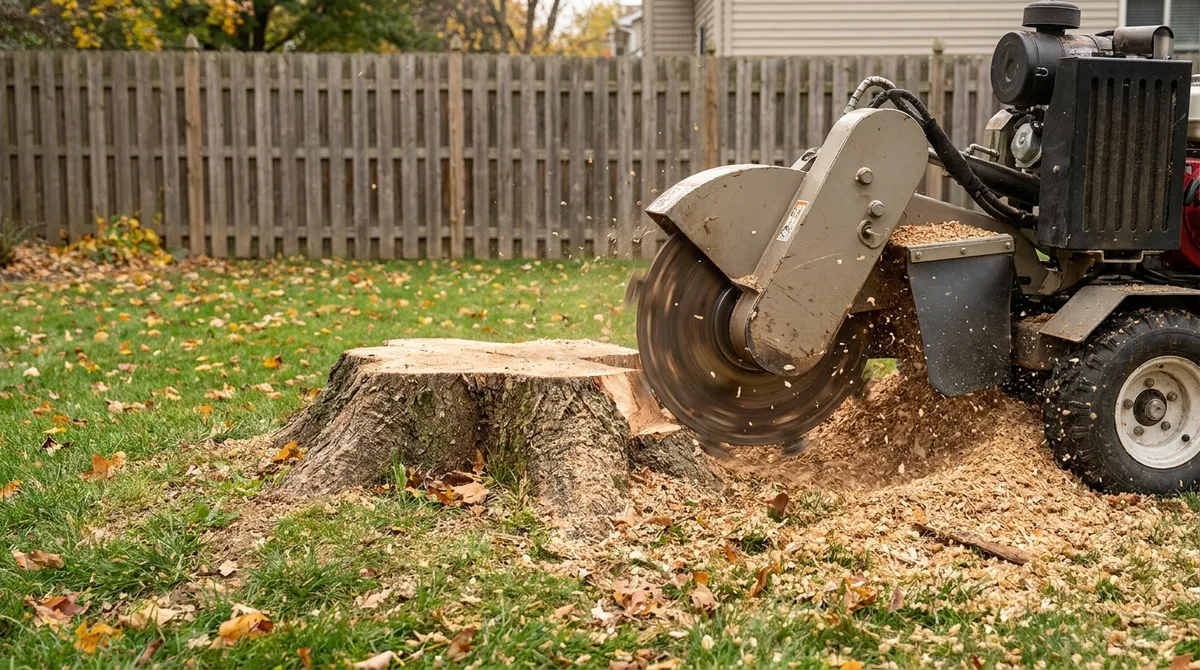
The roots stay where they are and decompose slowly over the next several years. Most homeowners never notice them. The hole is filled with the chips themselves or with topsoil, depending on what you want to plant or build on top.
Grinding is generally faster and less disruptive than full root excavation, making it a practical choice for many residential yards.
When Full Removal Is Worth the Extra Cost
A handful of situations actually call for full extraction:
- You are pouring a foundation, patio, or driveway exactly where the stump is.
- You want to plant a new tree in the same spot — leftover roots can interfere with new root growth.
- The roots are damaging plumbing, septic lines, or a foundation.
- You want a perfectly level lawn with no chip-filled depression visible.
Outside those cases, paying for full removal is usually paying for a benefit you will not actually use.
What Happens to the Hole
After grinding, you have a depression filled with wood chips. There are three reasonable ways to handle it:
- Leave the chips in place and top with a thin layer of topsoil and grass seed. Cheapest. Settles a bit over time.
- Have the chips hauled away and the hole backfilled with clean topsoil. Best for replanting grass cleanly.
- Use the chips as mulch in a flower bed elsewhere on the property. Free mulch — but watch the nitrogen.
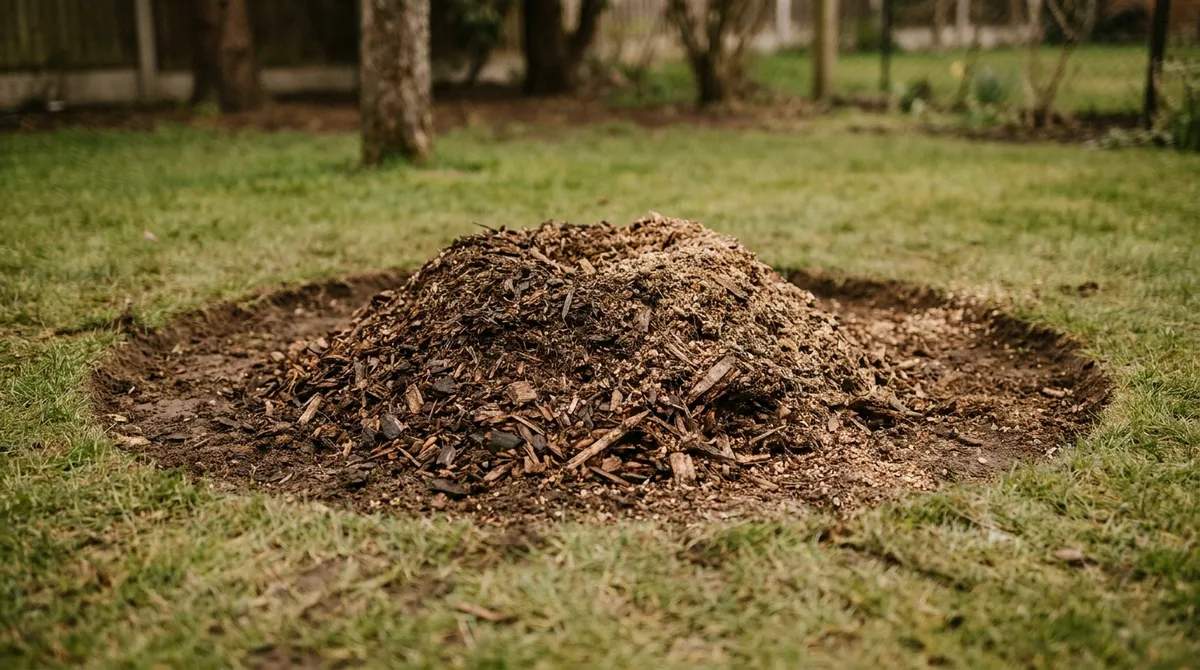
One thing to know: fresh wood chips temporarily pull nitrogen from the soil as they decompose. If you spread them on a flower bed, add a little nitrogen fertilizer or compost on top to keep your plants happy.
When to Call a Pro vs. DIY
A small, well-rotted stump is a reasonable do-it-yourself project with a rented mini-grinder, a strong back, and a free afternoon. A large, fresh stump from a recently cut tree — especially an oak or maple — is a different story.
Full stump removal almost always calls for a pro because the equipment (excavator or stump puller) is heavy, expensive to rent, and unforgiving in clay soil.
Frequently Asked Questions
How much does stump grinding cost in the Chicago suburbs?
Most residential stumps fall in a few hundred dollars. Pricing depends mostly on diameter, accessibility, and how many stumps are on the same job. Grouping multiple stumps in one visit is usually the cheapest path.
Will the roots eventually grow back?
Sometimes. Species like elm, willow, and some maples can send up suckers from leftover roots after grinding. If sprouts appear, cut them off — they will eventually stop without leaves to feed them. Oaks, ash, and most other Chicagoland species rarely sucker.
Can I plant a new tree where the old one was after grinding?
Not in the exact same spot. Leftover roots and the nitrogen-poor chip-filled soil make the spot a poor home for a new tree. Plant a few feet away, or have the stump fully removed if you need that exact location.
How long does stump grinding take?
Most residential stumps are done in 15 to 45 minutes once the grinder is set up. Larger stumps with extensive surface roots can take longer. A typical multi-stump visit wraps in a couple of hours.
If you are not sure whether grinding or full excavation is the right move, JDS Tree Service can review the stump, access, and your plans for the area.