Safer Tree Height Management with Crown Reduction
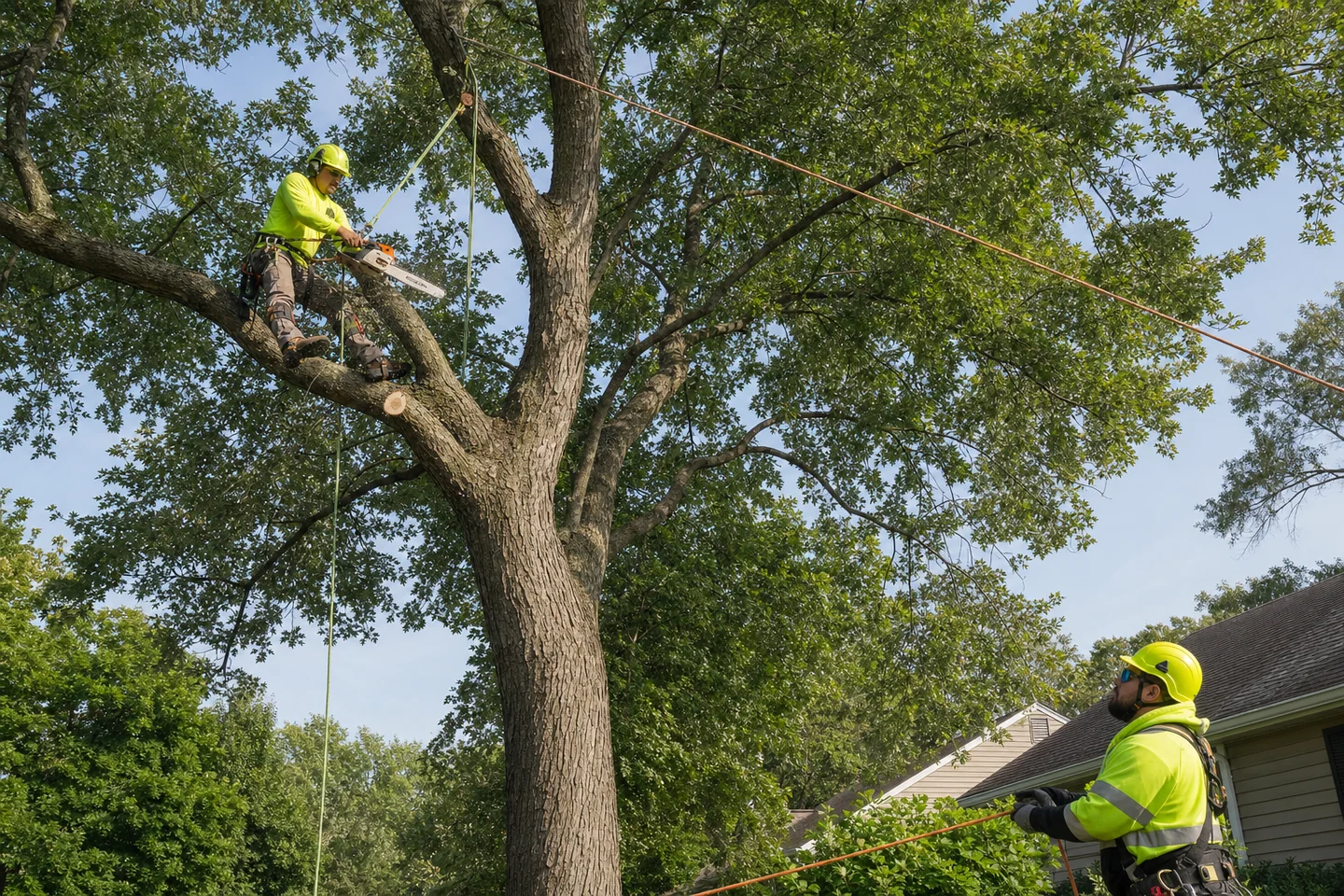
When a tree has outgrown its space, selective crown reduction may reduce height, spread, or end weight while preserving a more natural structure than tree topping.
How We Plan Crown Reduction & Tree Height Management
Crown reduction shortens selected limbs back to suitable lateral branches. It is different from topping, which leaves large stubs and can trigger weak, rapid regrowth.
Not every tree is a good candidate. Species, health, structure, clearance goals, and the amount of live crown that would need to be removed all affect the recommendation.
If the requested size cannot be reached without creating unacceptable stress or risk, removal and replacement may be safer than repeated severe cutting.
A reduction plan should have a specific objective such as building clearance, end-weight reduction, or managing a crown that has outgrown its available space. The amount removed must be limited by tree condition and structure; a dramatic one-time size change may not be responsible or achievable.
Customers comparing bids should ask whether cuts will return limbs to suitable laterals and whether the proposed result preserves a recognizable crown. Low cuts across major limbs may be topping even when described by another name. Follow-up inspection or future pruning may be recommended as the tree responds.
Why Choose JDS Tree Service
- Family-owned and owner-led service
- Fully insured — current documentation is available on request
- Free, no-obligation on-site estimates
- Clear recommendations based on the tree and property
- Debris cleanup discussed before work begins
- No indiscriminate topping or hat-racking
Frequently Asked Questions
Is crown reduction the same as tree topping?
No. Crown reduction uses selective cuts back to suitable lateral branches. Topping removes large portions of the canopy without regard for natural branch structure and can create long-term problems.