Why Tree Topping Damages Your Trees (And What to Do Instead)
Tree topping — cutting a tree's height by lopping off the tops of the main branches — is one of the most common requests homeowners make and one of the worst things you can do to a healthy tree. This guide explains why, what it does long-term, and what to ask for instead when a tree feels too tall for your yard.
There are real situations where height has to come down — utility-line clearance, tight setbacks, view preservation. But topping in the destructive sense is rarely the right tool, even then.
What Topping Actually Is
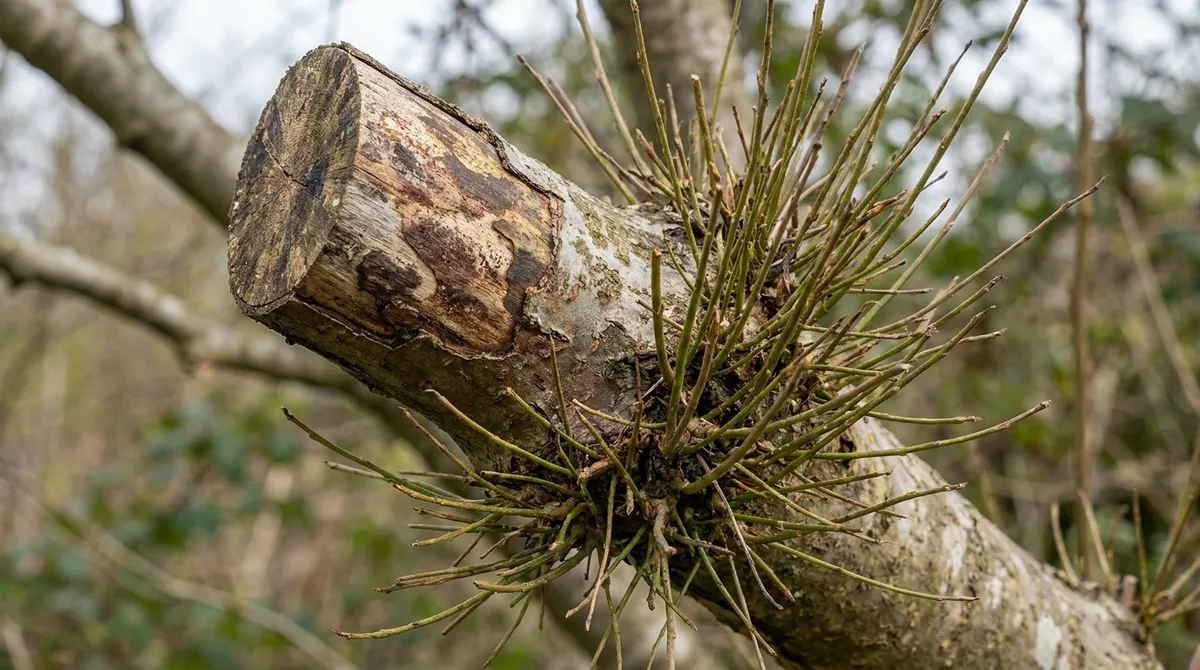
Topping means cutting the main upright branches of a tree back to stubs, with no regard for where the cuts land. The tree responds with a frantic burst of weak, fast-growing shoots from below the cuts.
It is sometimes confused with crown reduction or pollarding. They are not the same. Crown reduction takes height down by cutting back to a healthy lateral branch; topping cuts to a stub and walks away.
A topped tree is recognizable a year later by the dense, broom-like growth at the cut points and the awkward, blunt outline against the sky.
The Long-Term Damage
Topping creates several problems at once:
- Sunscald and decay. Sudden exposure of inner branches to direct sun damages bark, and the open stubs let decay fungi enter.
- Weak regrowth. The shoots that emerge are poorly attached to the parent branch — they tear off in storms.
- Stress and decline. Removing most of the leaves at once cuts off the tree's food supply. Many topped trees never fully recover.
- Worse hazard, not less. A tree that was tall but sound becomes shorter and unstable. The risk goes up, not down.
- Higher long-term cost. Topped trees need more frequent maintenance and often have to be removed earlier.
Why It Is Still So Common
Topping persists for a few reasons that are worth naming honestly:
- It is fast and cheap to do — lower per-hour cost than a real reduction.
- It looks dramatic, which feels like a job well done in the moment.
- Some homeowners specifically ask for it, often because a previous tree was topped without obvious problems for a few years.
- A few low-effort outfits will do whatever a homeowner asks without explaining the trade-offs.
A reasonable tree-care company will explain the alternatives before they pick up the saw.
The Safer Alternatives
When a tree genuinely needs to be smaller, there are better tools than topping:
Crown reduction
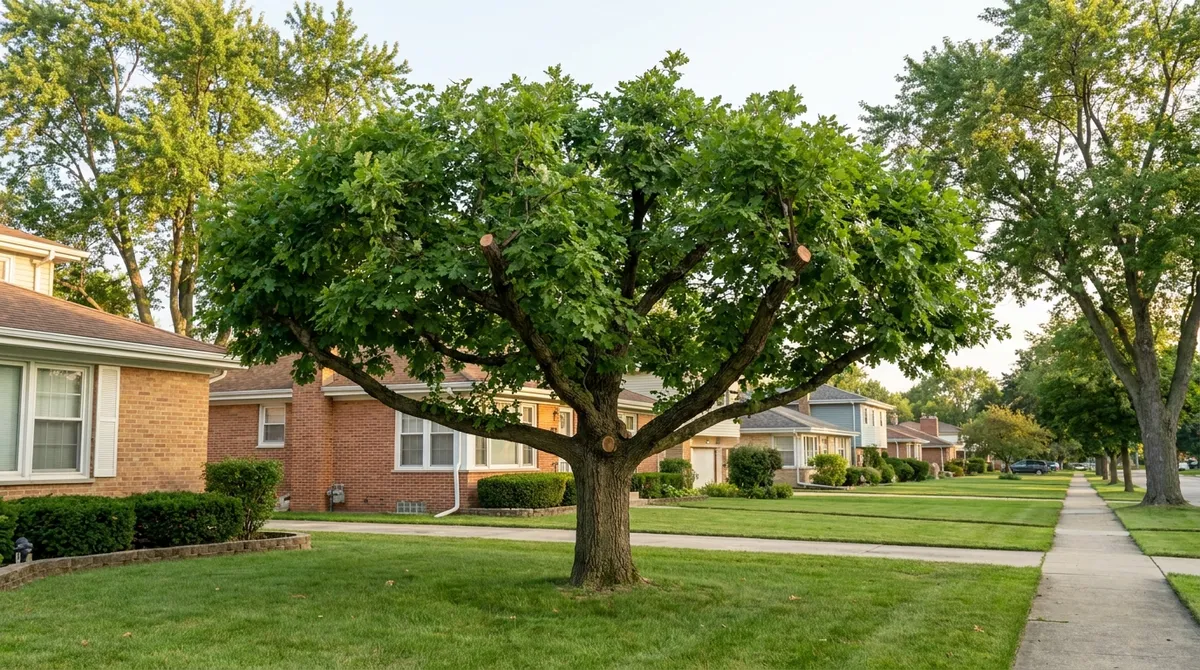
Cuts each main branch back to a strong, healthy side branch that can take over as the new leader. The tree's outline stays natural, the wounds close cleanly, and regrowth is structurally sound. This is the right answer in most cases.
Crown thinning
Selectively removes interior branches to let more light and wind through. The tree stays the same height but feels smaller and is less likely to catch the wind in a storm.
Crown raising
Removes lower branches to clear sight lines, walkways, or roof lines without changing the height of the canopy.
When Real Height Reduction Is Justified
A few situations actually call for serious height work, but they still call for thoughtful work — not topping:
- Power line clearance — done by utility-trained crews under strict standards.
- Storm-damaged trees with broken tops — the goal is restorative, removing only what is broken or unstable.
- Construction setbacks — sometimes a strategic crown reduction is required to keep a tree alongside a new build.
- Severely overgrown urban trees — multi-year, gradual reductions can sometimes restore a more reasonable size.
Frequently Asked Questions
My neighbor had their tree topped and it looks fine. Why is mine different?
A topped tree often looks fine for the first year or two while it pushes new shoots. The damage shows up later — weak limb attachment, decay, decline, and a higher risk of failure in storms. Five years out, the difference is usually obvious.
What's the difference between topping and pollarding?
Pollarding is a specific, traditional technique started when a tree is young and repeated every year on the same cut points. It produces a knuckle that the tree adapts to. Topping is a one-time aggressive cut on a mature tree that never adapts to it. Most topping in the U.S. has nothing to do with pollarding.
Can a topped tree be saved?
Sometimes. A skilled arborist can guide regrowth over several years through restoration pruning, choosing the strongest new shoots and removing the rest. The tree never fully returns to its original form, but the result is far safer and healthier than letting the topped regrowth run wild.
How much does crown reduction cost compared to topping?
Crown reduction is generally more per visit because it is more skilled work that takes longer. Over the life of the tree, it is usually cheaper because it does not create the cycle of frequent re-cutting and eventual removal that topping does.
If a tree feels too tall for its location, JDS Tree Service can explain whether selective crown reduction is practical. When safe reduction is not appropriate, removal and replacement may be the better option; indiscriminate topping is not recommended.