What to Do First When a Storm Damages a Tree
The first hour after a storm is when people get hurt cleaning up trees they should not be touching. This guide is a calm, practical sequence: what is safe to do yourself, what to leave alone until a pro arrives, and how to handle insurance so you do not lose money.
Sudden storms and strong regional winds can drop large limbs with little warning, so a simple safety plan matters.
Step One: Do Not Touch It Yet
Before you do anything, run through a quick safety check. A damaged tree is unstable, and hidden hazards account for almost every storm-cleanup injury.
- Are any branches touching power lines or service drops? If yes, stay back and call your utility — not a tree service first.
- Is the tree leaning toward the house, vehicles, or where children play? Treat the area as a no-go zone.
- Are limbs hanging but not yet fallen ("widow-makers")? They can drop without warning, especially after the wind dies and the tree shifts.
- Is the trunk split? A split trunk can fail entirely with no further weather — keep distance.
If any of those are yes, stay out of the affected area until a pro evaluates it.
What to Photograph Before You Move Anything
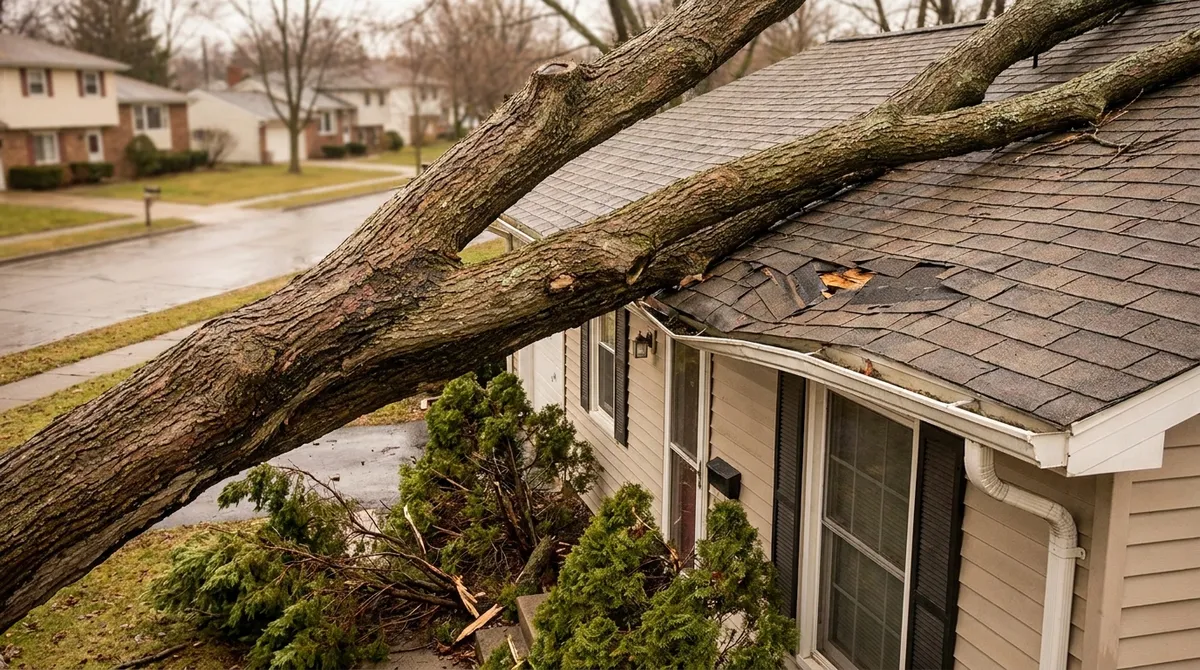
Insurance and any future contractor work both depend on a clear record of the damage. Before any cleanup, take photos:
- Wide shots of the whole tree from at least two angles.
- Close-ups of any structural damage — split trunks, root plates lifted from the ground, broken branch unions.
- Anything the tree damaged on the way down: fences, sheds, vehicles, the house.
- A timestamped photo if your phone supports it. Some insurers ask.
When Insurance Pays vs. When It Does Not
Homeowner insurance generally covers tree damage in fairly narrow circumstances. The patterns:
- A tree falls and hits a covered structure (house, garage, fence) — usually covered, minus your deductible.
- A tree falls and hits nothing — usually not covered. Removal is on you.
- A neighbor's tree falls on your property — usually your insurer pays first, then they try to recover from the neighbor only if neglect is proven.
- Preventative removal of a tree before it falls — almost never covered.
Call your insurance carrier early — even before cleanup if it is safe to wait. They will tell you whether to file a claim and what documentation they want.
How a Crew Stabilizes a Storm Tree
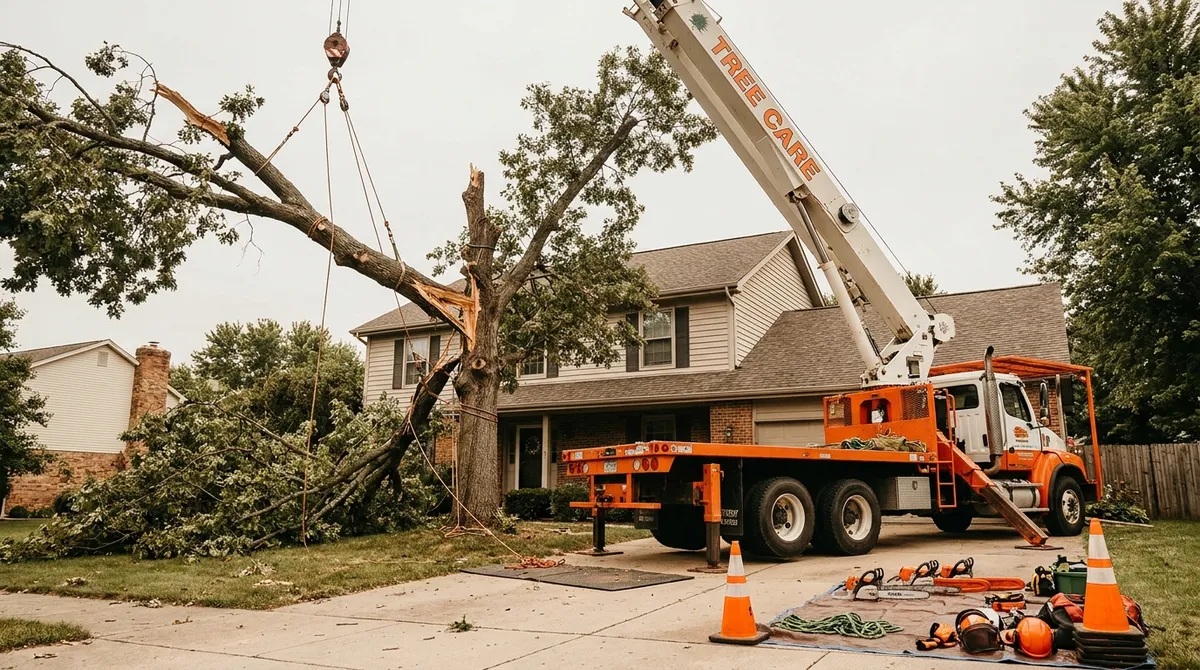
When pros arrive at a damaged tree, the work usually goes in this order:
- Establish a drop zone and cordon it off.
- Remove the most unstable parts first — hanging limbs, partial breaks, anything ready to fall.
- Decide whether the tree itself is salvageable. A tree that has lost more than about a third of its canopy is usually not.
- Dismantle the rest in sections, using rigging or a crane if anything important is below.
- Clean up debris and grind the stump if removal is the call.
After Cleanup: Will Your Other Trees Survive?
A tree that survived a major storm with most of its canopy and trunk intact will usually pull through, but it is worth a follow-up inspection in the next dormant season. Key things to check:
- Any new lean compared to before the storm.
- Cracks in the trunk or major limbs that you can now see clearly.
- Soil heaved on one side of the root flare.
- Branch unions where bark has split open.
A small amount of corrective pruning the following winter often helps the tree recover its shape and shed the damaged sections cleanly.
Frequently Asked Questions
Should I cover a hole in my roof from a tree before the insurance adjuster arrives?
Yes — insurers expect you to make reasonable temporary repairs to prevent further damage (a tarp, for example). Save your receipts; that cost is usually reimbursable.
My tree fell into my neighbor's yard. Who pays for removal?
Usually each homeowner is responsible for damage on their own side of the line, regardless of which yard the tree started in. Insurance treats it the same way. Talk to both insurers if there is significant damage.
Is it safe to use my own chainsaw on storm debris?
For limbs that are fully on the ground, in an open area, with no tension in them — yes, with proper protective gear. For anything still attached to the tree, suspended, or under tension (a "spring pole"), stay back and call a pro. Tensioned wood is unpredictable and dangerous.
How fast should I get a damaged tree looked at?
For obvious hazards — split trunks, leaning toward structures, branches over walkways — within a day or two. For trees that survived but lost some limbs, a few weeks is fine. Call sooner after major storms because schedules fill up.
If a storm has damaged a tree, JDS Tree Service provides insured cleanup and removal from Lynwood across its south suburban service area.